


Maka Botchorishvili: „For Georgia, maintaining peace and stability has long been a central priority of both its foreign and domestic policy. This is the policy we pursue, and it defines our priorities“
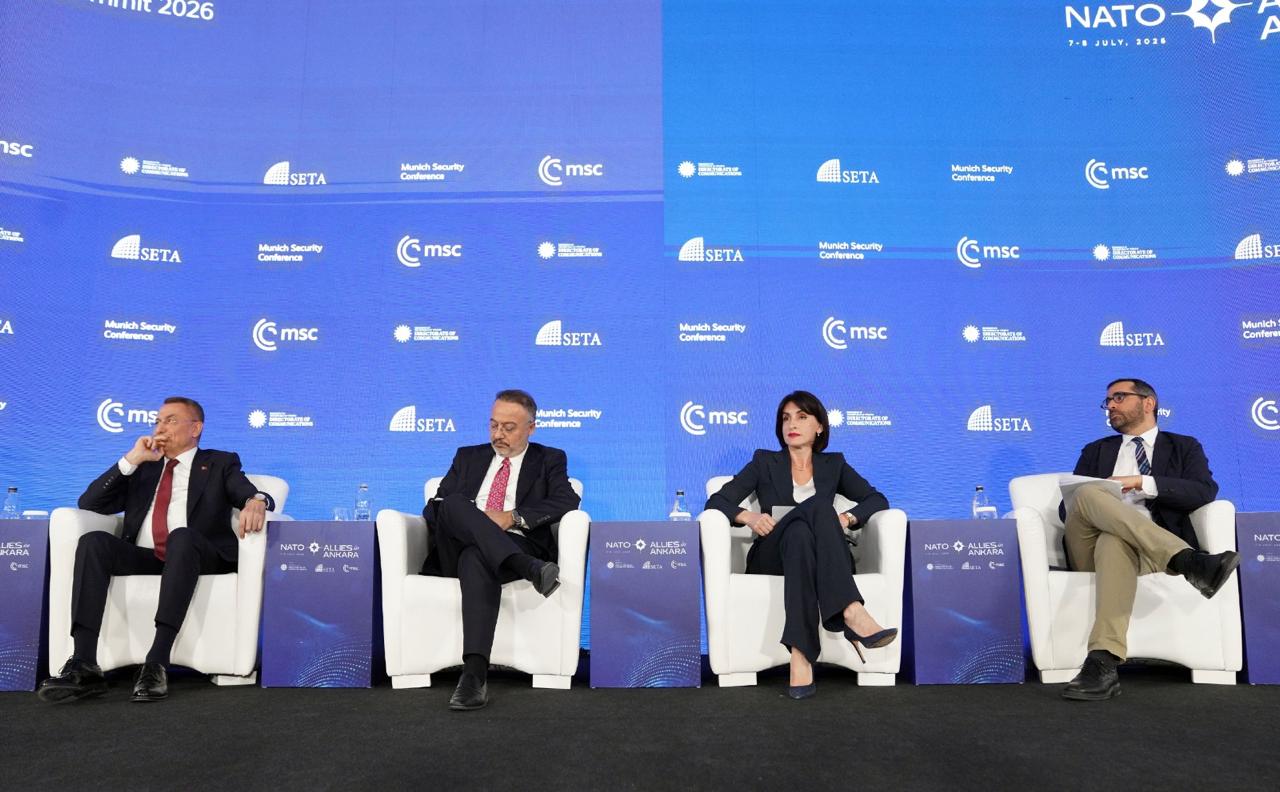
On 7 July 2026, within the framework of the "Allies in Ankara" event held in the Republic of Türkiye, the Deputy Prime Minister, Minister for Foreign Affairs, Maka Botchorishvili, participated in the panel discussion entitled "Beyond the Post-Cold War Order: Navigating an Era of Strategic Uncertainty," where the Minister addressed the audience.
In her remarks, the Minister underscored the longstanding partnership between Georgia and NATO, noting that the Alliance and its member states have made a significant contribution to strengthening Georgia's defence capabilities. Minister Botchorishvili further emphasized that Georgia has been an active contributor to NATO's missions and operations.
“The partnership between NATO and Georgia have developed very closely, and we have been working together for many years. NATO and its member states have contributed to the development of Georgia’s defence capabilities. At the same time, it is important to mention that Georgia has always contributed significantly to the transatlantic agenda and to NATO missions and operations. The Afghanistan mission alone is worth mentioning, as it demonstrates Georgia’s contribution as a non-NATO member state. Georgia was the largest troop contributor to the mission,” stated Maka Botchorishvili.
The Minister also highlighted the security challenges facing Georgia, noting that maintaining peace and stability remains the foremost priority of country's foreign and domestic policy.
„For Georgia, maintaining peace and stability has long been a central priority of both its foreign and domestic policy. Twenty percent of Georgia's territory remains under Russian occupation that definitely creates a huge security challenge for the entire region. It remains our foremost security challenge and the priority in terms of security for both our country and the wider region. However, Georgia’s response to occupation and conflict has always been very clear. We do not see a military solution to this conflict. Keeping peace and stability is the number one priority of Georgia’s foreign and domestic policy. This is the policy we pursue, and it defines our priorities”- noted the Minister for Foreign Affairs.
Maka Botchorishvili drew attention to the prevailing geopolitical context, emphasizing the growing strategic importance of the South Caucasus and the Black Sea region. According to the Minister, Georgia's geographical location provides significant opportunities for enhancing connectivity and advancing the development of economic corridors.
“Looking at the current geopolitical context, it is clear that the region is gaining increasing importance. The South Caucasus and the Black Sea region are becoming increasingly important. Looking at the Russia-Ukraine war and the developments in the Middle East, the perspective on the Black Sea region, the South Caucasus and Georgia is definitely changing,” highlighted Maka Botchorishvili.
The Minister underscored the strategic importance of trilateral cooperation among Georgia, Türkiye and Azerbaijan, emphasizing that regional connectivity and the implementation of joint projects are also critical from a security perspective. Minister Botchorishvili further highlighted the growing role of the Middle Corridor, describing it as an important geoeconomic and geopolitical space.
“We have an excellent example of regional cooperation between Türkiye, Georgia and Azerbaijan. Over the decades, we have developed a strategic partnership that has taken on a different meaning today from a security perspective as well, because the successful projects we have implemented over the years, energy projects and transport corridors, have acquired a different significance today,” the Minister said.
According to Maka Botchorishvili, hybrid threats, disinformation and information manipulation constitute significant challenges to regional stability.
“One more thing that needs to be highlighted is stability. Maintaining stability is particularly demanding today because we are facing hybrid threats, disinformation, and an unprecedented flow of information and misinformation. From that perspective as well, Georgia provides an excellent example of how important it is to prevent excessive external influence in order to maintain stability,” emphasized the Minister for Foreign Affairs.
In the concluding part of her remarks, the Minister addressed Georgia's economic development, emphasizing that peace, stability and the consistent implementation of economic reforms constitute the foundation of the country's success.
“Peace, economic resilience, and stability are essential. Georgia can be a good example in this regard. If you manage to keep peace, stability, and a sustainable economic reform agenda, the answer is very clear. If you look at Georgia’s economic growth, it is impressive in Europe,” highlighted the Minister for Foreign Affairs.