


The First Deputy Minister of Foreign Affairs has met with the European Union Ambassador to Georgia
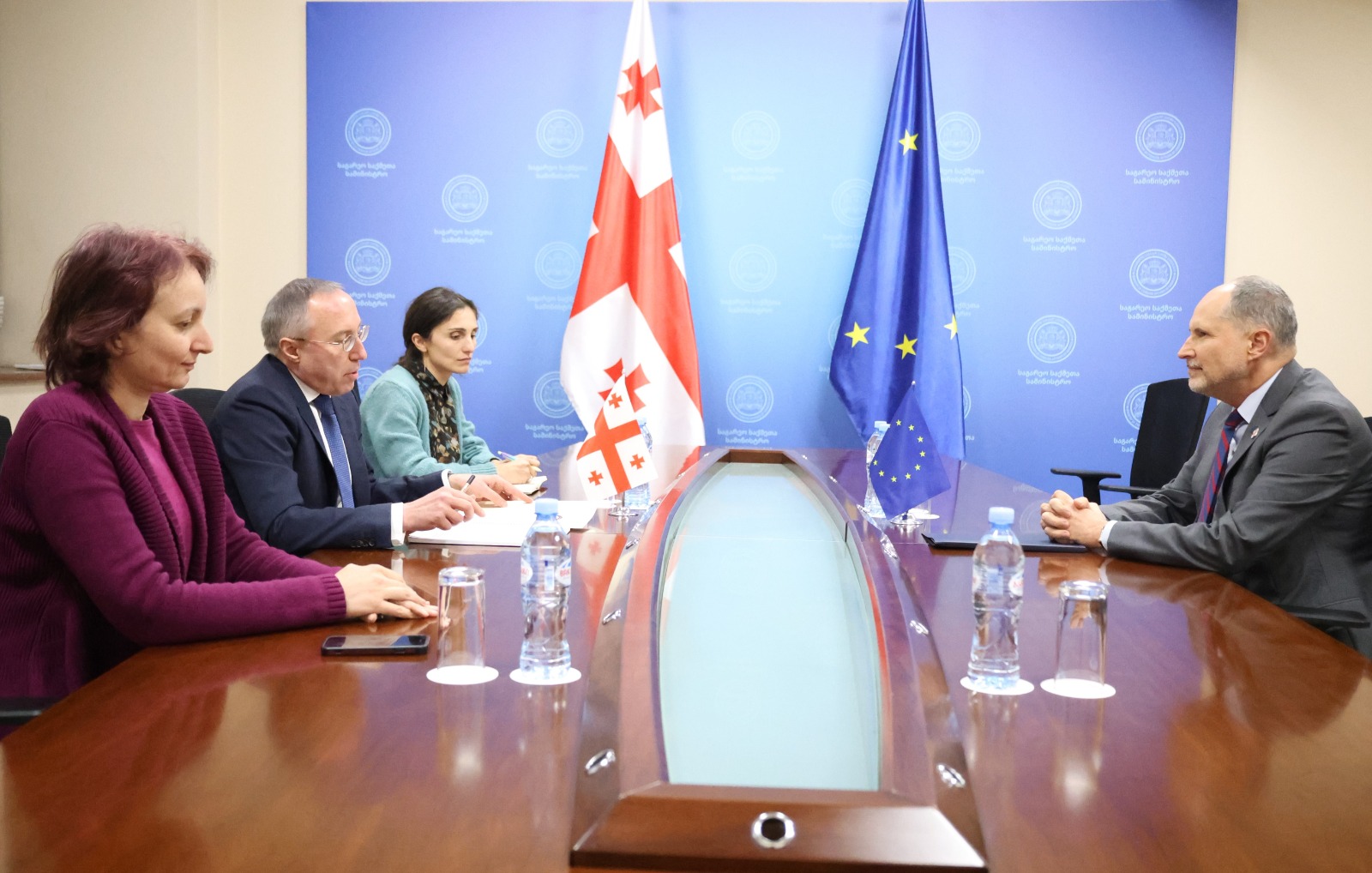
The First Deputy Minister of Foreign Affairs of Georgia, George Zurabashvili, held a meeting with the Head of the EU Delegation to Georgia, Ambassador Pawel Herczynski. The purpose of the meeting was to communicate Georgia’s position concerning the implementation of restrictive measures imposed by the European Union against the Russian Federation, as well as the country’s efforts to prevent and disrupt instances of sanctions circumvention.
George Zurabashvili provided the EU side with comprehensive information on the measures undertaken by the Georgian authorities and the efforts of state institutions in monitoring cargo and vessel movements within Georgia, identifying sanctioned entities, uncovering international activities linked to the so-called “shadow fleet,” and ensuring compliance with restrictive measures imposed by international financial institutions. The First Deputy Minister emphasized that information on the Georgian side’s efforts, proactively undertaken measures and identified cases is regularly communicated to international partners, primarily to the relevant institutions of the European Union, in the form of reports.
George Zurabashvili stressed that media reports suggesting the possible inclusion of the Kulevi Port on the European Union’s sanctions list are entirely baseless, unfounded, and lacking any factual support, as there have been no recorded instances of sanctioned vessels being received and/or sanctions being circumvented at the port. The First Deputy Minister further noted that EU institutions have raised no questions or concerns regarding the port’s operations, highlighting that over the years, a robust practice of cooperation between Georgia and the European Union on restrictive measures has been established, as confirmed by positive assessments from the EU Sanctions Envoy, David O’Sullivan.
At the meeting, the Georgian side expressed the hope that EU institutions and member states will take into account the objective facts and Georgia’s extensive efforts to ensure compliance with restrictive measures, as well as to prevent and disrupt attempts to circumvent sanctions, and that they will not, through the imposition of restrictions, undermine the strategic Caspian-Black Sea-Europe Corridor or the EU’s Middle Corridor initiative, of which the Kulevi Port is an integral part.