


Statement of the Deputy Prime Minister, Minister for Foreign Affairs of Georgia, Maka Botchorishvili at the panel discussion at the event - “Allies in Ankara”, entitled "Beyond the Post-Cold War Order: Navigating an Era of Strategic Uncertainty"
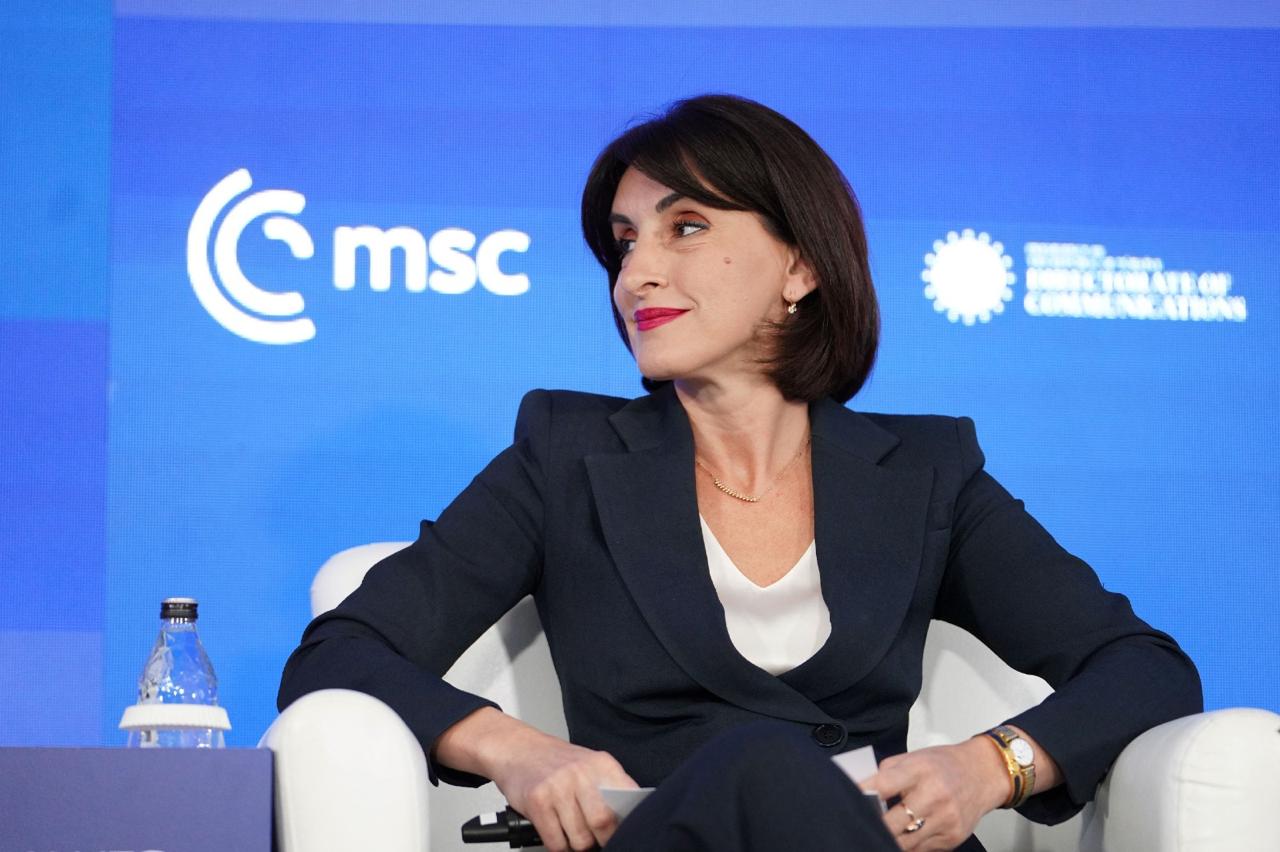
I would like to begin by expressing my appreciation to the organisers for inviting me to Allies in Ankara, held alongside the NATO Summit. This is an important event, and we are following the discussions and their outcomes very closely, as they will definitely have an impact on Euro-Atlantic security. The Black Sea region is an integral part of that, and we are therefore following these discussions very closely.
Well, Georgia is not part of NATO; we are not a member state of NATO. We do not have that security umbrella over our heads. However, the relationship and partnership between NATO and Georgia have developed very closely, and we have been working together for many years.
NATO and its member states have contributed to the development of Georgia’s defence capabilities. At the same time, it is important to mention that Georgia has always contributed significantly to the transatlantic agenda and to NATO missions and operations.
The Afghanistan mission alone is worth mentioning, as it demonstrates Georgia’s contribution as a non-NATO member state. Georgia was the largest troop contributor to the mission.
That shows that the relationship between NATO and Georgia is very close, and we look at that development and the development of our cooperation as essential for our future and long-term strategic goals.
Well, Georgia’s geographical location in this geopolitical context is very important, I would say. We are literally at the crossroads of different interests, ideas, and ambitions. While this undoubtedly creates challenges, it also gives opportunities. We have to look at it from both perspectives.
For Georgia, maintaining peace and stability has long been a central priority of both its foreign and domestic policy. 20% of Georgia's territory remains under Russian occupation that definitely creates a huge security challenge for the entire region. It remains our foremost security challenge and the priority in terms of security for both our country and the wider region.
However, Georgia’s response to occupation and conflict has always been very clear. We do not see a military solution to this conflict. Instead, we believe that the path forward lies in the peaceful resolution of the conflict, keeping stability, and focusing on development.
Keeping peace and stability is the number one priority of Georgia’s foreign and domestic policy. This is the policy we pursue, and it defines our priorities. Looking at the current geopolitical context, it is clear that the region is gaining increasing importance. The South Caucasus and the Black Sea region are becoming increasingly important.
Looking at the Russia–Ukraine war and the developments in the Middle East, that is very clear, the perspective on the Black Sea region, the South Caucasus, and Georgia is definitely changing. Here, we have an excellent example of regional cooperation between Türkiye, Georgia, and Azerbaijan. Over the decades, we have developed excellent cooperation and a strategic partnership that has taken on a different meaning today from a security perspective as well, because the successful projects we have implemented over the years, energy projects and transport corridors, have acquired a different significance today.
And this is exactly what also contributes to the security environment. We cannot look at security and discuss it only from the perspective of military capabilities. We have to look at the different dimensions of security, and from that perspective, Georgia and the regional cooperation we have developed together with our partners, Türkiye, Azerbaijan, and others in the region, are definitely extremely important today.
Again, looking at the geopolitical context, the need for new, reliable trade and economic routes is definitely a necessity from today’s perspective. Here, we often talk about the development of the Middle Corridor, which is not merely a transport corridor, but an important geopolitical and geo-economics space.
Today, everything comes together at one crossroads, energy, digital connectivity, and that is something very important for European security, and indeed for wider international security, if you look at our region from that perspective.
One more thing that needs to be highlighted is stability. Maintaining stability is particularly demanding today because we are facing hybrid threats, disinformation, and an unprecedented flow of information and misinformation.
From that perspective as well, Georgia provides an excellent example of how important it is to prevent excessive external influence in order to maintain stability, and how essential it is to keep institutions strong, is definitely very important for any state for their stability.
From that perspective, I would highlight the issue of sovereignty and the right of countries, or the ability of states, to define their foreign and domestic policies and to keep them free from excessive foreign influence. That is something very important, and I think Georgia is a good example of how important this is in the current situation.
And again, peace, economic resilience, and stability are essential. Georgia can be a good example in this regard. If you manage to keep peace, stability, and a sustainable economic reform agenda, the answer is very clear.
If you look at Georgia’s economic growth, it is impressive in Europe. We have around 9% economic growth for more than five years now. That is important not only for Georgia but also from a regional perspective, as it creates additional opportunities for development, for keeping region resilient, and for future connectivity that can contribute to the security of the wider region.